
|
|||||||||
|
|||||||||
|
objectives
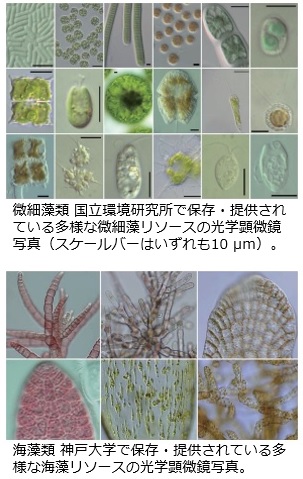
Algae are defined as an assemblage of polyphyletic organisms that conduct oxygen-evolving photosynthesis except for land plants. As shown in this definition, algae include various genetic elements that represent bacteria, plants and protozoa; thus living in different habitats including extreme environments. From these characteristics, versatile biological functions may be expected in algae. To facilitate the utilization of such algae, systematic collection of algal strains and strain information is necessary.
In National BioResource Project "Algae 1st phase," the core institute National Institute for Environmental Studies (NIES) collected, maintained and supplied algal resources to researchers, in collaboration with Kobe University, University of Tsukuba, National Science Museum, University of Tokyo and Hokkaido University. Finally, microalgal strains maintained in National Science Museum and University of Tokyo were transferred to the Microbial Culture Collection at NIES and macroalgal strains collected by Hokkaido University were transferred to Kobe University, and two core collections were established. In the second phase, microalgae and macroalgae are maintained in and distributed from NIES and Kobe University, respectively. Moreover, we will focus on the distribution of genome DNA, addition of strain information, and quality control as well as collecting new and important taxa. page top
|
|||||||||
|
organization
page top
|
|||||||||
|
Available Resources
2,476 strainsMicro AlgaeNational Institute for Environmental Studies : 2,096 strainsMacro AlgaeKobe University : 230 strainsHokkaido University : 150 strains
page top
|
|||||||||
|
Distribution/Deposition
page top
|
|||||||||
|
Research Result
page top
|
|||||||||
|
Committee
page top
|
|||||||||
|
page top
|
|||||||||
|
Collaboration
page top
|
|||||||||
|
Others
page top
|
|||||||||


